
Natural Language Processing (NLP) – Core Foundations
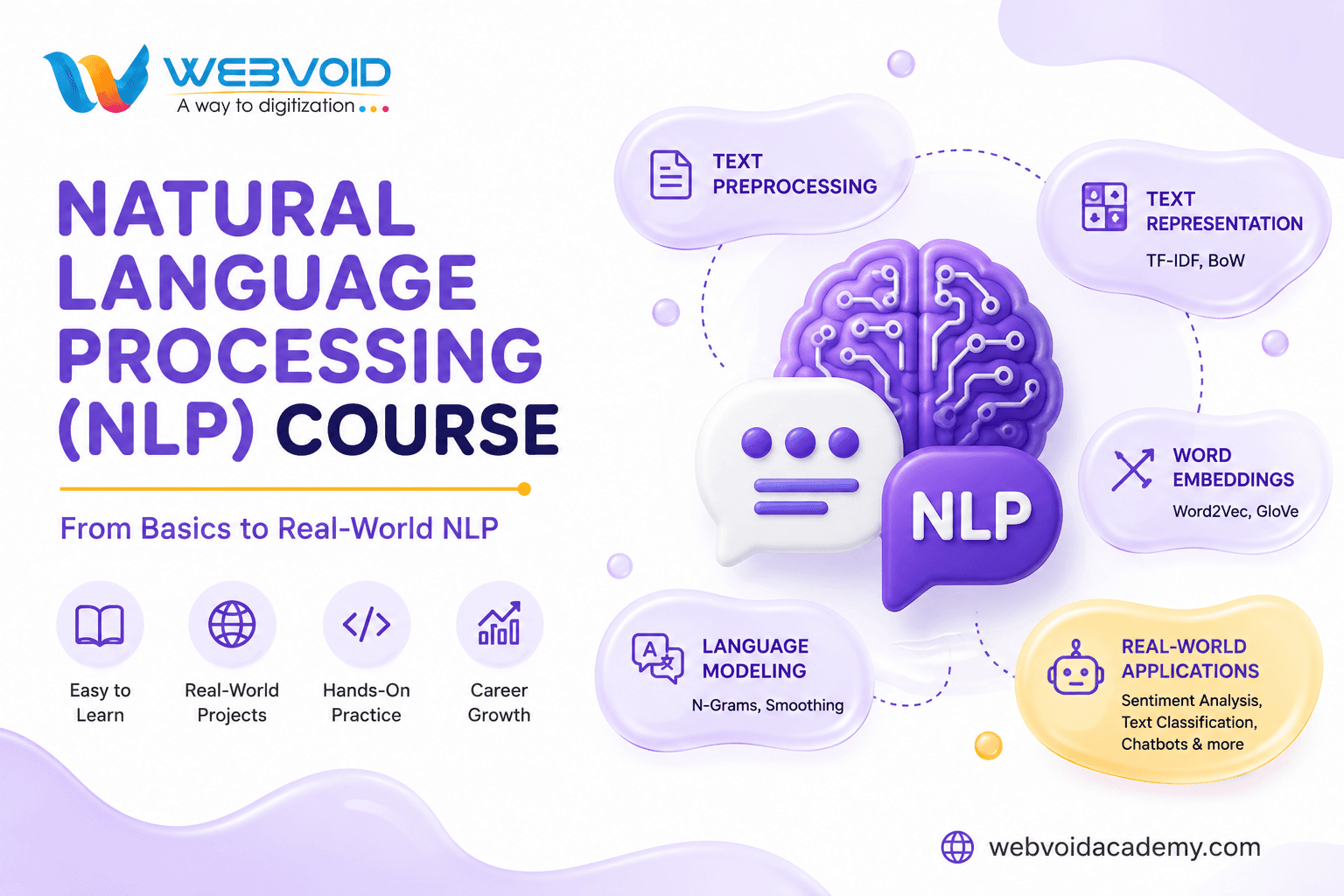
Master the fundamentals of NLP, text preprocessing, embeddings, language models, and real-world NLP applications.
 Created by Balaji Gangadharam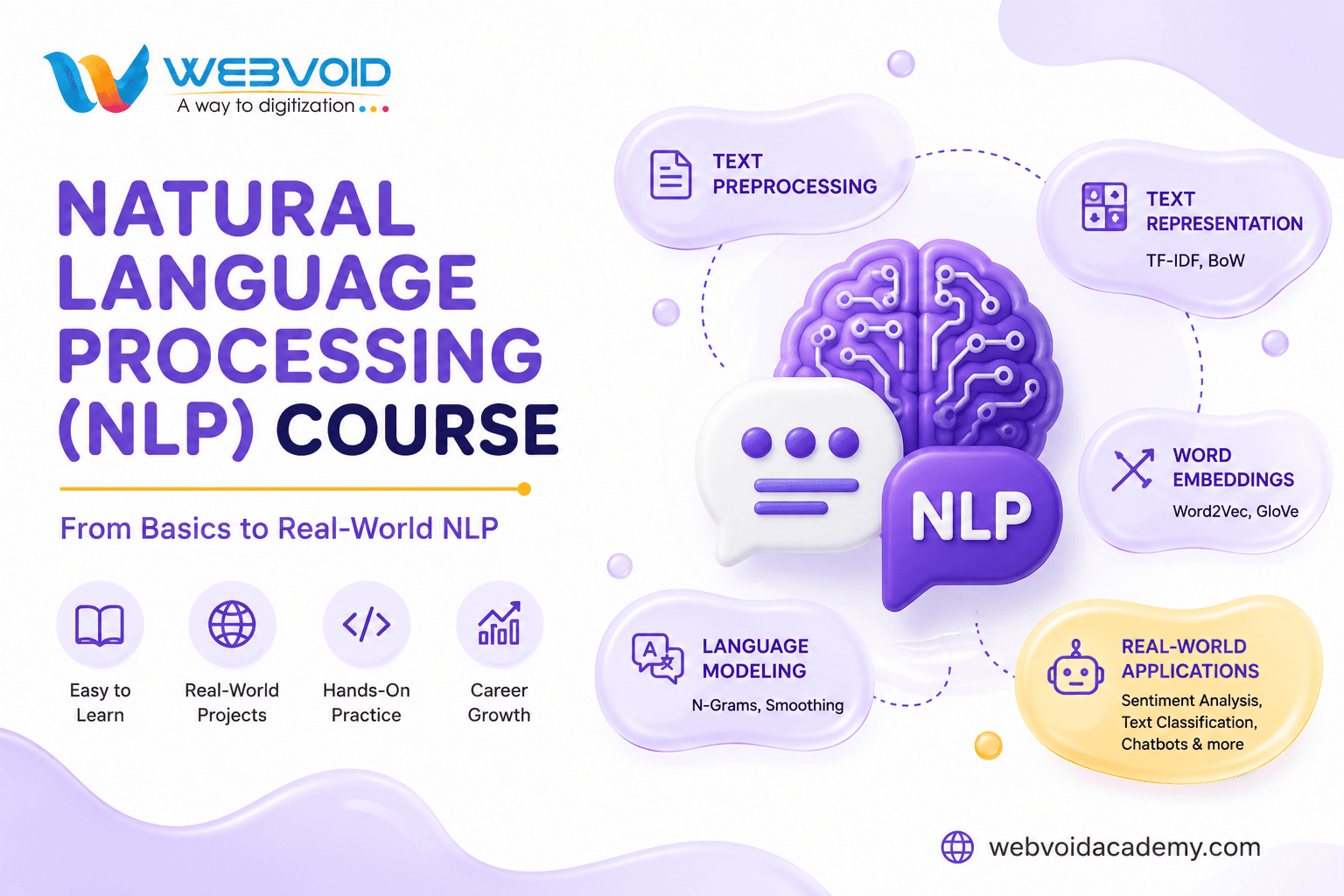
What's Included With This Course
Every course comes bundled with matching study materials, interview question packs, and scenario-based questions — no extra purchase needed.
Study Materials
Cheat sheets, PDF notes, architecture diagrams, and revision cards for this topic.
- ✓ Topic-specific cheat sheets
- ✓ Annotated code examples
- ✓ Quick revision cards
Interview Questions
Curated questions with detailed answers, company tags, and explanations matched to this course.
- ✓ Detailed model answers
- ✓ Company-tagged questions
- ✓ Difficulty-graded sets
Scenario-Based Questions
Real-world system design and production scenario questions to prepare you for interviews.
- ✓ System design scenarios
- ✓ Production debugging cases
- ✓ Architecture trade-off questions
About This Course
Master the Foundations of Natural Language Processing
Natural Language Processing (NLP) is one of the most important domains in Artificial Intelligence, enabling machines to understand, analyze, and generate human language. From chatbots and virtual assistants to sentiment analysis, machine translation, search engines, and recommendation systems, NLP powers many intelligent applications used every day.
This course is designed to provide a strong foundation in NLP by combining theoretical concepts with hands-on implementation using Python. Learners will explore the complete NLP pipeline, starting from text preprocessing techniques such as tokenization, stemming, lemmatization, stop-word removal, and part-of-speech tagging. The course then progresses into text representation techniques, including One-Hot Encoding, Bag of Words (BoW), TF-IDF, and Word Embeddings using Word2Vec and GloVe.
Students will also gain an understanding of language modeling concepts, N-grams, Markov models, Laplace smoothing, and evaluation metrics used in modern NLP systems. Throughout the course, practical business use cases and coding exercises reinforce each concept, preparing learners for real-world NLP applications and technical interviews.
Designed by industry experts, this self-paced program includes concept-strengthening MCQs, interview questions, scenario-based exercises, live doubt-clearing sessions, and career guidance to help learners build a successful career as an NLP Engineer, AI Engineer, or Machine Learning Engineer.
Skills You Will Learn
Prerequisites
- Basic Python Programming
Projects Included
Restaurant Review Sentiment Analysis
beginnerBuild an end-to-end sentiment analysis application that classifies customer reviews as Positive, Negative, or Neutral. The project covers text preprocessing, feature extraction using TF-IDF, model training, evaluation, and prediction, providing hands-on experience with real-world customer feedback analysis.
Spam Email Detection System
intermediateDevelop a machine learning model to detect spam and legitimate emails using NLP preprocessing techniques, Bag of Words, TF-IDF, and classification algorithms. Learn how NLP is applied in email filtering systems.
News Article Category Classification
intermediateBuild an NLP pipeline that automatically categorizes news articles into domains such as Sports, Politics, Business, Technology, and Entertainment using text preprocessing and feature engineering techniques.
Semantic Text Similarity using Word Embeddings
advancedImplement a semantic similarity engine using Word2Vec and GloVe embeddings to measure the similarity between two sentences. This project demonstrates how vector representations capture contextual meaning beyond keyword matching.
Course Curriculum
Meet Your Instructor

Balaji Gangadharam
Founder, Product Director & Generative AI Architect at Webvoid Technologies
Balaji Gangadharam is a Generative AI Architect, Product Director, and technology leader with extensive experience in Artificial Intelligence, Natural Language Processing, Deep Learning, Large Language Models, Retrieval-Augmented Generation (RAG), and enterprise-scale software development. As the Product Director at Webvoid Technologies, he has led the design and development of AI-powered products, EdTech platforms, enterprise applications, and intelligent automation solutions. His expertise spans the complete AI lifecycle—from data preprocessing and model development to production deployment, observability, monitoring, and system optimization. Over the years, Balaji has mentored aspiring engineers, software developers, and AI professionals, helping them transition into high-demand technology careers. His teaching approach focuses on building strong foundations, practical implementation, real-world projects, and production-grade engineering practices. Through Webvoid Academy, he aims to bridge the gap between academic learning and industry requirements by providing structured, project-driven, and career-focused programs that prepare learners for roles such as Generative AI Engineer, NLP Engineer, Machine Learning Engineer, Deep Learning Engineer, and AI Solutions Architect.
Click to view profile →What Our Students Say
“The course provided a solid foundation in NLP. The explanations of text preprocessing, TF-IDF, and Word2Vec were clear and practical. The hands-on projects helped me understand how NLP is applied in real-world scenarios.”
Course Stats
Frequently Asked Questions
Ready to start your Generative AI Engineering journey?
Join thousands of students learning Python, NLP, Deep Learning, and Generative AI at Webvoid Academy.
Limited-Time Launch Offer
Enroll NowView CurriculumThis course includes
- 40+ hours of content
- Certificate of completion
- Lifetime access
- English
- Mentor support